


.webp)
Democratizing Access to Geospatial Intelligence: Our Investment in SkyFi
Geospatial intelligence has enormous potential to transform decision-making across sectors — from agriculture and energy to insurance and finance. Agriculture companies can monitor fields and supply chains, utilities can monitor and manage energy assets, and insurers can model risk and exposure. Across both public and private sectors, organizations are eager to harness this data to make smarter, faster, and more resilient decisions that will ultimately help industries adapt to climate change and improve responses to catastrophic weather events.
Over the past decade, a host of satellite operators and analytics providers have emerged to meet this growing demand. Billions of dollars have flowed into the sector, from capital-intensive satellite launches to new data-driven analytics platforms. Given the lower cost and increased supply, satellite launches are becoming commoditized, and the data quality has improved dramatically. On the analytics side, vertical solutions have generated real value, but many of these companies have struggled to build durable defensibility.
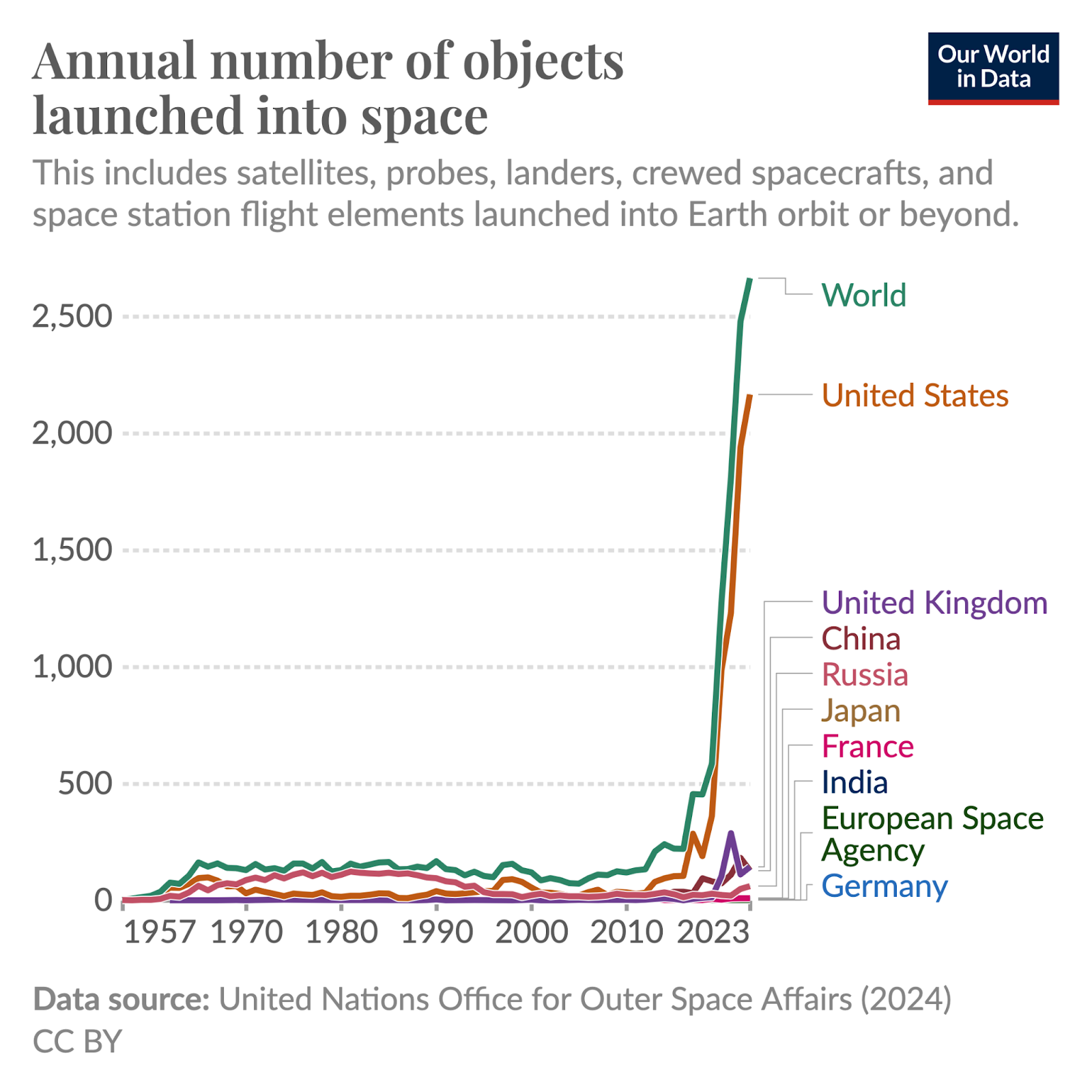
The global Earth Observation (EO) market is entering a period of rapid expansion. This growth is being fueled by rapidly increasing volumes of satellite data and increasingly powerful AI models to analyze it, as well as a widening set of high-value applications including defense modernization, climate monitoring, AI model training, infrastructure planning, and disaster response. Yet despite this progress, access to high-quality geospatial data remains out of reach for many potential users.
High contract minimums (often reaching six or seven figures), lengthy sales cycles, and long-term commitments make it difficult for small and midsize organizations to experiment use cases and scale. Even large enterprises often find themselves locked into single-provider ecosystems that don’t fully meet their needs.
Interpreting this data adds another layer of complexity because specialized expertise is still required to analyze imagery effectively. In short, the promise of geospatial intelligence is vast, but the market remains gated by cost, complexity, and accessibility.
Defense remains anchor customer while public sources dwindle
The US government has been a huge customer of commercial geospatial data; historically some providers report >50% revenue tied to U.S. government customers. Specifically, the U.S. defense and intelligence agencies are strategically shifting toward commercial, dual-use platforms, recognizing that private innovation can move faster than traditional procurement cycles.
Meanwhile, other public Earth Observation programs face shrinking budgets or decommissioned datasets. Agencies such as NOAA have reduced investment in open-access data and have gone so far as to remove archived datasets. This leaves fewer freely available resources for climate monitoring, agricultural forecasting, and importantly, data required to prepare for and respond to extreme weather events.
This signals a broader transformation: while defense remains an active buyer of private geospatial data, the commercial sector needs to fill in the gap left by the shrinkage of other publicly available data sources.
Our investment in SkyFi

At Buoyant, we’ve followed the evolution of geospatial data closely, particularly those that underpin climate risk intelligence. We’ve long believed that making high-quality Earth data universally accessible could unlock a new wave of innovation across both decarbonization and resilience.
That’s why we’re thrilled to announce our investment in SkyFi, a company on a mission to build an Earth intelligence platform that makes ordering and analyzing satellite imagery as easy as clicking “buy now”.
SkyFi is a global marketplace for Earth imagery and analytics. Through its web platform and mobile app, governments, companies, and individuals alike can instantly access archived satellite data or task a new image to be captured — no minimums, no opaque contracts, and no specialized training required.
The company’s AI-powered platform turns the legacy procurement model on its head, providing near-real-time access to optical, radar, and aerial imagery across hundreds of sensors. In addition, SkyFi’s integrated AI tools make it simple for customers without in-house experts to analyze imagery, helping transform raw pixels into actionable insights in minutes.
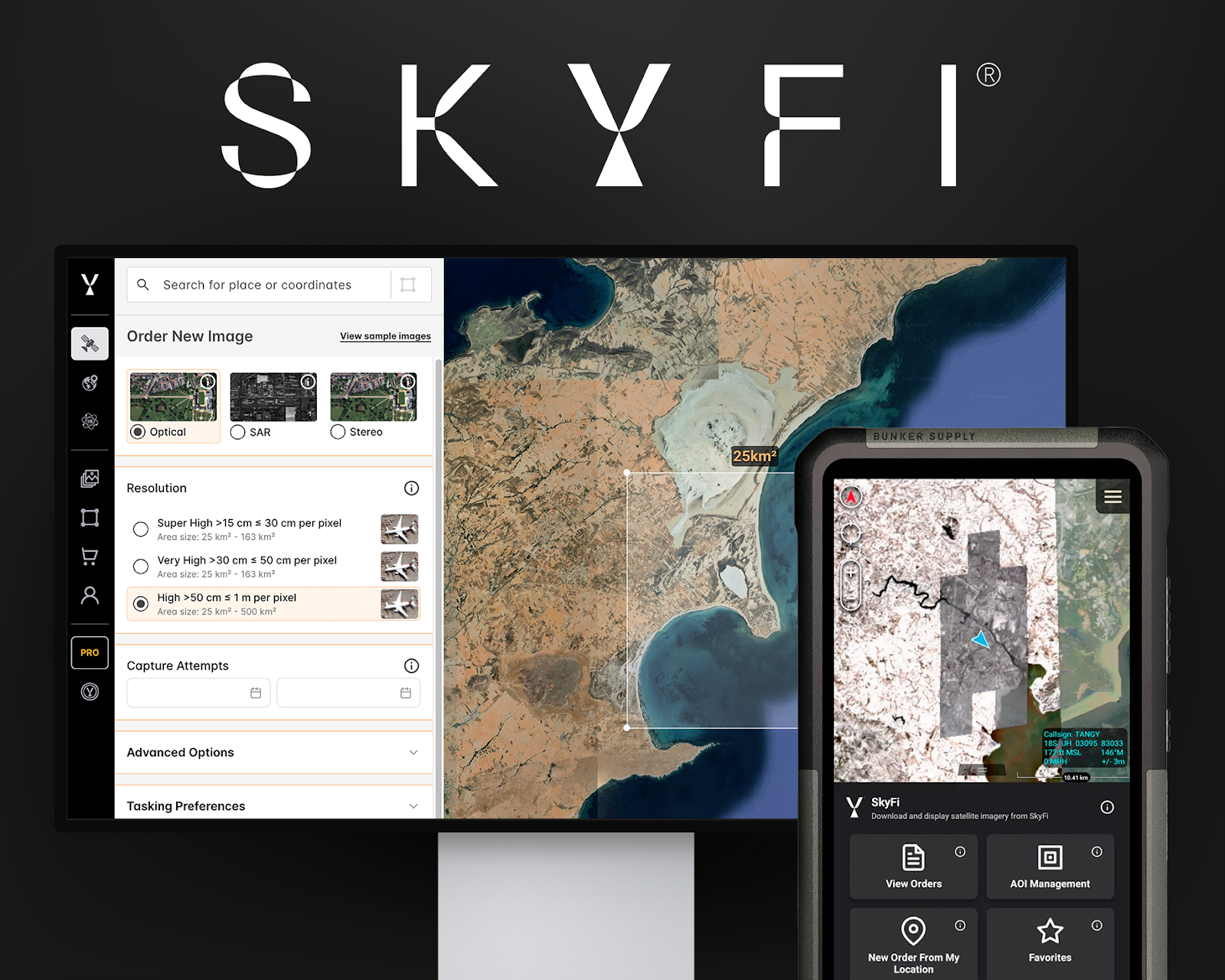
Making Earth data accessible
SkyFi’s three-pronged approach reflects its ambition to make Earth observation data foundational across industries:
- Commercial Marketplace – serving enterprises, SMBs, and even consumers with on-demand imagery and analytics. SkyFi already supports customers across energy, agriculture, insurance, finance, mining, and construction.
- White-Label Partnerships – enabling leading providers such as Vantor (fka Maxar), Planet, and ICEYE to reach new audiences through SkyFi’s front end store.
- Government Contracts – supporting missions with multiple government agencies. To date, SkyFi has been awarded multiple contracts and is expanding its government portfolio.
Already, SkyFi is powering a diverse range of use cases, from supply chain tracking (detecting disruptions and verifying activity), to change management (monitoring construction, deforestation, or flood damage), to renewable energy development (siting and monitoring solar and wind projects).
The team behind the mission
Luke Fischer, SkyFi’s CEO and co-founder, brings rare depth across aviation, technology, and defense. A former U.S. military aviation officer and Uber flight operations leader, Luke understands both the rigor of mission-critical systems and the agility of modern software. SkyFi was also co-founded by Bill Perkins who experienced the pain of buying satellite imagery himself as a gas and power trader. Today Bill serves as the President of SkyFi.
Luke is joined by an exceptional team — Mike Panos, Julian Sirakov, Kate van Dam, Andrew Canales, and Eric Rhoades — who combine deep expertise in government sales, AI, engineering, data science, and geospatial analytics. Together, they’re transforming how the world accesses, understands, and acts on information from space.
Welcome to the Buoyant Boat
Buoyant’s investment thesis bridges climate decarbonization and resilience, backing companies that help societies anticipate, respond to, and reduce climate risk. SkyFi fits squarely within both. By democratizing access to geospatial intelligence, SkyFi is not just building a data platform, it’s empowering better climate decisions across sectors, geographies, and scales.
We’re proud to co-lead SkyFi’s $12.7M Series A alongside IronGate Capital Advisors, with new participation from DNV Ventures, TFX Ventures, Beyond Earth Tech, Nova Threshold, and Chris Morisoli, and existing investors RSquared VC and J2 Ventures.
Welcome to the Buoyant boat, SkyFi!
Read the press release here.
Read Axios coverage here.
Related Posts
Subscribe to stay updated on news, insights, & invites to special events within our community.
We’re lighting the path forward for the ClimateTech industry—keep up with us along the journey.

